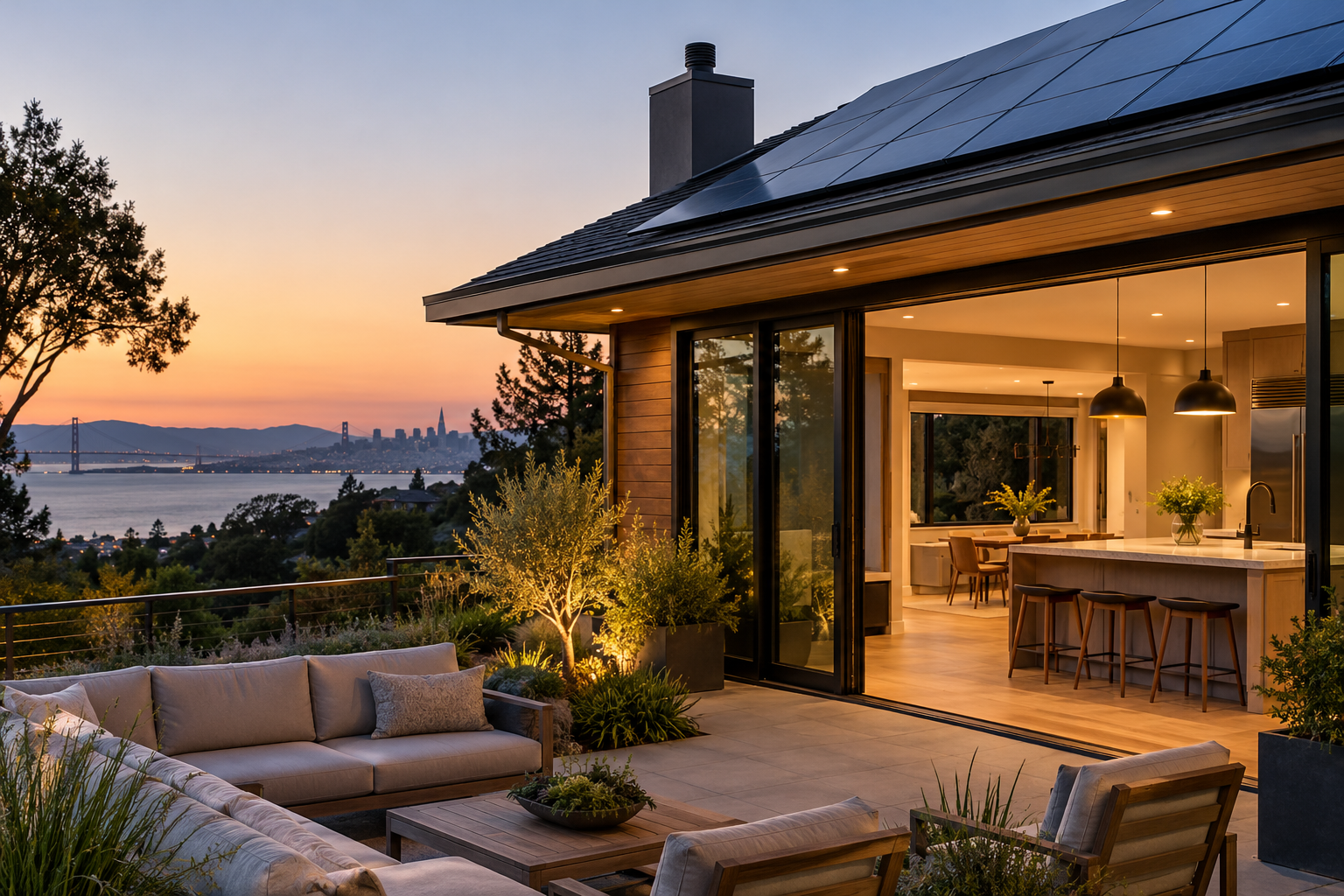
How to Future-Proof Your Bay Area Home
A home renovation is a significant investment. The decisions you make today should continue to make sense years from now.
That can be challenging in the Bay Area where building codes, energy requirements, technology, utility costs, and homeowner expectations continue to evolve. A renovation that works well today can become less efficient, or more expensive to modify, if those changes aren’t considered during the planning process.
Future-proofing your home doesn’t mean predicting the future. It means making thoughtful decisions today that give your home flexibility for tomorrow.
Think Beyond the Immediate Project
When homeowners plan a remodel, it’s natural to focus on what they want to change right now: a larger kitchen, a new bedroom suite, better outdoor space, or an updated floor plan.
But a major renovation can also be an opportunity to address systems that may otherwise become expensive to upgrade later:
- Is your electrical service adequate for your future needs?
- Does your heating and cooling system make sense for the long term?
- Should you consider a heat pump water heater?
- Are there opportunities to improve insulation, windows, or energy efficiency?
- Will your current plumbing or electrical infrastructure support future additions?
- Are there new building requirements that could affect your project?
- Would it be easier to make certain upgrades while walls and ceilings are already open?
These questions don’t necessarily mean you need to spend more. They mean you should understand your options before construction begins.
Electrification Is Changing the Renovation Equation
A big change facing Bay Area homeowners is the transition to electric home systems.
The Bay Area is investing substantially in incentives to help homeowners make the transition. Current programs include incentives for technologies such as heat-pump water heaters and heat-pump HVAC systems. San Francisco’s CleanPowerSF program, for example, offers bill credits for qualifying electric upgrades.
At the same time, regional regulations governing residential water heaters are evolving. The Bay Area Air District’s Rule 9-6 establishes zero-NOx standards for certain water-heating equipment, while proposed amendments have also addressed implementation, affordability, and physical or electrical constraints.
The important point for homeowners isn’t simply that gas appliances are being phased out.
It’s that the choices you make about your home’s mechanical and electrical systems today can affect your renovation options, and your costs, later.
Should You Upgrade Your Electrical Panel?
A larger electrical service isn’t automatically necessary for every renovation or electrification project. Some newer appliances are designed to work within existing electrical capacity, and some heat-pump water heaters can be installed without a panel upgrade.
But that doesn’t mean electrical capacity should be ignored.
If you’re already planning a major renovation, it may be worth evaluating whether your electrical system can accommodate future needs such as:
- Heat-pump HVAC
- Electric water heating
- Induction cooking
- Electric vehicle charging
- Solar and battery storage
- Additional living space
- Future home technology
Making the right infrastructure decision during a remodel can be considerably easier than revisiting it after the project is complete.
Build for Efficiency and Comfort
Future-proofing isn’t only about regulations.
It’s also about making your home more comfortable, efficient, and adaptable.
Better insulation, high-performance windows, efficient HVAC systems, improved ventilation, and thoughtful shading can all contribute to a home that performs better over time.
Some improvements may be difficult to justify as stand-alone projects. But when you’re already opening walls, replacing a roof, renovating a kitchen, or substantially changing the floor plan, the economics can look very different.
That’s why future-proofing needs to be considered as part of the whole project, rather than as a list of individual upgrades.
Plan for the Changes You Can’t See
Some of the most valuable future-proofing decisions aren’t visible when the project is finished.
Infrastructure matters.
That might mean planning for future electrical capacity, creating accessible locations for mechanical equipment, allowing for future technology or thinking about how the home could accommodate changing family needs.
A good renovation should solve today’s problems without creating tomorrow’s.
Future-Proofing Doesn’t Mean Overbuilding
There is a temptation to prepare for every possible future scenario. That’s rarely the best approach.
The goal isn’t to install every new technology or make every possible upgrade.
It’s to understand which decisions are difficult or expensive to change later and determine whether addressing them now makes sense.
That requires looking at the property as a whole:
What are you changing? What are you likely to change later? What infrastructure will those changes require? And what can be done now while the project is already underway?
Start With the Right Questions
At Seamus Collins Construction, we believe good construction starts well before construction.
We work with homeowners, architects, designers, and consultants to understand the scope of a project, identify potential challenges, and develop a realistic approach to budget and schedule.
That includes looking beyond the immediate wish list.
If you’re planning a renovation, it can be worth asking not only “What do we want to build?” but also:
“What will this home need five, ten, or twenty years from now?”
That question can lead to better decisions about everything from mechanical systems and electrical infrastructure to layout, energy efficiency, and materials.
Future-Proof Your Next Renovation
You don’t have to predict exactly what the future will bring. You just need to make decisions today that leave your home ready for it.
If you’re considering a remodel, addition or custom home, Seamus Collins Construction can help you evaluate your property’s existing conditions, understand potential infrastructure and regulatory considerations, and determine which improvements make sense to address as part of your project.
Before you start building, let’s look at what your home—and your investment—may need in the future.
